August 25, 2026
Every screening tool claims tosave you time. The harder question is what the time savings cost you. Inscreening, the cost that matters most has a name: the false negative, arelevant study that the tool helped you miss.
Miss an irrelevant study and youlose a few seconds. Miss a relevant one and your review has a hole in it thatno amount of polishing will fix. So when researchers compare screening tools,the numbers worth watching are sensitivity, how many of the truly relevantstudies the tool helps you catch, and the false-negative rate, how many slipthrough.
The study
In 2023, an independent teampublished a peer-reviewed, head-to-head comparison of freely availablemachine-learning-assisted screening tools in the journal Systematic Reviews(Salles dos Reis et al., DOI: 10.1186/s13643-023-02231-3). The paper is open access;anyone can read the full methodology.
The researchers put each toolthrough the same screening task and scored them on quantitative performance andqualitative usability.
The results
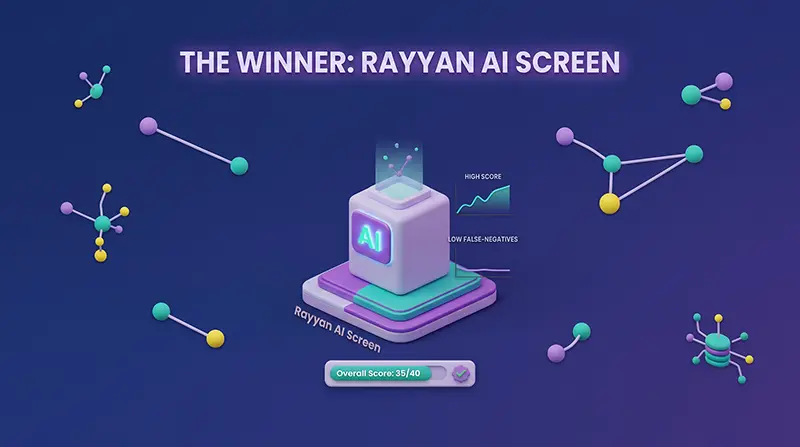
• Highest overall score: Rayyanrated 35 out of 40, the top result among the tools compared.
• Highest sensitivity: Rayyan'sAI correctly identified 78% of the truly relevant studies, the best of thegroup.
• Lowest false-negative rate: 21%,meaning fewer relevant studies missed than with any other tool tested.
To be clear about what thesenumbers mean in practice: no ML tool screens alone, and none should. The AIranks and predicts; trained humans decide. A higher-sensitivity assistant meansyour human reviewers spend their attention where it counts and miss less.
The part we like most
We did not run this study. Wecould not have influenced it. That is exactly why we cite it. Rayyan's approachto evidence about itself is the same as its approach to evidence in general:independent, peer-reviewed, and checkable beats self-reported, every time.
Alongside the study, our ownuser research points the same direction: in the original Rayyan survey, usersreported an average 40% reduction in screening time, and a third reportedsavings above 50%.
The full study is one clickaway, together with every other independent measure of how Rayyan performs, atrayyan.ai/impact. If you have a stack of abstracts waiting, you can put thehighest-sensitivity free screening assistant to work on them today.